Finance & Supply Chains Theatre
Financing Biodiversity: The Next Frontier for Private Sector Leadership
Day 1 : 12:00 – 12:50
We are not only in a climate crisis, but also a biodiversity crisis. The benefits and opportunities of nature-based solutions to address global biodiversity challenges have never been more urgently needed and relevant. Investments in nature-based solutions will be key to accelerating the pace and scale required for nature preservation.
Learnings
- According to the UN, investments in nature must triple by 2030 to help save ecosystems. However, the private sector currently provides only 14% of funding towards nature-based solutions. What are the barriers and knowledge gaps for unlocking private capital for nature-based solutions?
- What are the opportunities and challenges of developing and scaling financially viable projects that bring positive nature and biodiversity impact? What opportunities exist for businesses to pursue new sources of revenue and reap the benefits of increased resilience and purpose?
- Perspectives from risk mitigation, regulatory and policy alignment
Post-Event Actions
- Rethink the role that your company and industry can play in accelerating the investment in initiatives that bring positive nature and biodiversity outcomes.
Speakers

Moderator
Bien Wong
Assistant General Manager – Group ESG cum Executive – Group Knowledge Management Office
The Hong Kong and China Gas Company Limited (Towngas)
Bien Wong
The Hong Kong and China Gas Company Limited (Towngas)
Assistant General Manager – Group ESG cum Executive – Group Knowledge Management Office
Bien Wong is an experienced professional with experience in ESG strategy development, corporate communications, and investor relations. As the head of Group ESG, he oversees the integration of sustainability concepts into business strategies, ensuring compliance with stringent international sustainability standards. Concurrently, he also leads the Group Knowledge Management Office, focusing on capturing critical knowledge and embedding it within the company’s culture. Prior to joining Towngas, he worked consistently in the sustainability industry, which deepened his passion for driving positive, lasting impact for the community.
Beyond his professional responsibilities, Bien serves on various advisory committees of the HKSAR Government and on the Board of various non-profit organizations and professional associations. He is also an Adjunct Associate Professor at Hong Kong Baptist University and a member of the Advisory Committee of the Department of Earth and Environmental Sciences at The Chinese University of Hong Kong.
Bien holds a Master’s degree from The University of Hong Kong and a Bachelor’s degree from the University of York, United Kingdom. He was among the first ESG professionals in the Asia-Pacific region to complete the EFFAS Certified ESG Analyst (CESGA) programme and was subsequently invited by the European Federation of Financial Analysts Societies (EFFAS) to serve as an examiner for the qualification, contributing to the development of ESG professional standards in the region.
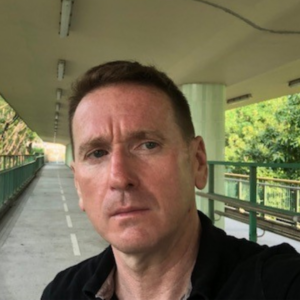
Stuart Beavis
Regional Lead for Dutch Fund for Climate and Development (Asia)
Stuart Beavis
Regional Lead for Dutch Fund for Climate and Development (Asia)
Stuart is the Asia-Pacific Regional Lead of the origination facility for the €160 million Dutch Fund for Climate and Development. He has directly worked on over 20 projects in the region, ensuring projects are structured to be business-ready and meet investment criteria. Prior to WWF, Stuart spent 25 years in the financial industry managing derivative sales and trading businesses at LSE, LIFFE, Salomon Brothers, HSBC, UBS, and Jefferies.
Jenny Fan
Executive Director, Sustainable Finance
Jenny Fan
Executive Director, Sustainable Finance
Jenny Fan is the Executive Director of Sustainable Finance at ANZ in Hong Kong. She has over 15 years of experience at ANZ, previously serving as Co-Head of Debt Capital Markets for North Asia. Jenny works with major corporations and financial institutions, executing complex transactions across various banking functions. Her expertise lies in providing sustainable finance solutions to ANZ’s customers transitioning to a zero-carbon economy.
My Sustainability Goals for 2023:
To deepen my connection with nature and support sustainable practices that nurture the Earth and its inhabitants.
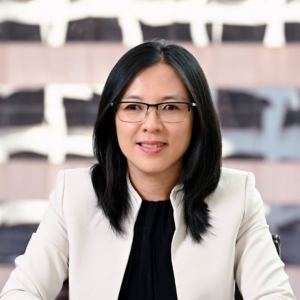
Lit Ping Low
Group Sustainability Director
DFI Retail Group
Lit Ping Low
DFI Retail Group
Group Sustainability Director
Lit Ping Low brings over 20 years of experience in driving sustainability and climate change priorities across a wide range of sectors including retail, food and beverage, hospitality and conglomerates.
As the Group Sustainability Director at DFI Retail Group, Lit Ping leads the development and implementation of DFI’s sustainability strategy, including the decarbonisation of operations and supply chain, climate and environmental sustainability risk management, and ensuring transparent sustainability disclosures. She leads and represents DFI in key partnerships and collaborations on sustainability to deliver our strategic ambition with our ecosystem partners.
Prior to DFI, she was PwC’s Asia Pacific Climate lead partner, supporting businesses and governments in developing net zero strategies, managing climate risks, and mobilising green finance. Her experience also includes extensive collaboration with international organisations such as the World Economic Forum, UNFCCC, UNEP Finance Initiative, and the Carbon Disclosure Project, contributing to global dialogues on climate transition pathways and sustainable finance frameworks.
My Sustainability Goals for 2026:
Lit Ping’s ongoing priorities is to lead DFI’s efforts to meet our short- and medium- term sustainability targets. In 2026, this includes looking at more breakthrough or innovative collaboration approaches that can help amplify our strategic ambition across all People, Products and Planet priorities.
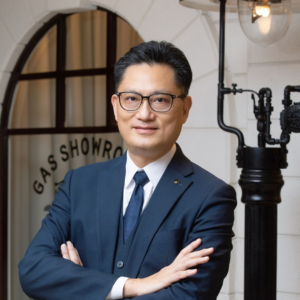
Isaac Yeung
Head of Corporate ESG/ Head of Corporate Affairs
Isaac Yeung
Head of Corporate ESG/ Head of Corporate Affairs
Having served at The Hong Kong and China Gas Company Limited (Towngas, HK.0003) for over 30 years, Isaac Yeung’s experience spans ESG, company secretarial services, human resources, project investment, corporate affairs and beyond. He sits on the board of directors for multiple major gas companies with businesses across the Chinese Mainland. He is also a member of the Steering Committee of the Climate Governance Initiative HK Chapter.
My Sustainability Goals for 2023:
To elevate biodiversity risk mitigation and integrate TNFD into the risk management modeling of corporations.
Supported by
Friends of the Earth (HK)
Friends of the Earth (HK) (“FoE (HK)”) is a leading environmental advocate that actively engages with the government, businesses, and the community to foster equitable and sustainable policymaking, business practices, and community lifestyles in protection of the local and regional environment.
Our sustainability goals for 2026:
We are dedicated to promoting green finance and cultivating ESG talents. By partnering closely with government and research institutes, professional bodies, SME associations, and international organisations, we strive to build a sustainable society and environment for all.
Products, Services and Solutions:
- Charity/NGO
- Education/Training/Certification
- Green Finance & Investments
- Sustainability Services
General Enquiry Email Address: foehk@foe.org.hk
General Enquiry Phone Number: 2528 5588
Meet our 2026 speakers:

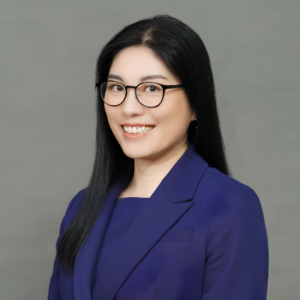
With thanks to
ANZ Banking Group Limited
Australia and New Zealand Banking Group (ANZ) is one of the largest companies in Australia and New Zealand by market capitalisation and a major bank across Asia Pacific. ANZ’s purpose is to shape a world where people and communities thrive. That is why we strive to create a balanced, sustainable economy in which everyone can take part and build a better life.
Operating in 32 markets, ANZ first established its presence in Hong Kong in 1970. Hong Kong serves as a regional hub for our Asia business where we look to connect customers with trade and capital flows between Hong Kong and our home markets of Australia and New Zealand, as well as creating business opportunities and deep insights across various sectors.
ANZ is committed to the United Nations Sustainable Development Goals, are a signatory to the Net-Zero Banking Alliance, and have an ambitious target of funding and facilitating at least AUD50b (~HKD270b) worth of sustainable solutions for our customers by 2025.
In Hong Kong, we look to support our customers on their sustainability journey through a deep understanding of their business, and by providing market-leading financing solutions that are structured in line with international best practice, rooted in science, and emphasise positive environmental and social impact. This is made possible by our Sustainable Finance team, a cohort that comprises of experienced financiers and sustainable technicians, many of whom are based in Hong Kong, Singapore, and the United Kingdom.
Like in our home markets, ANZ Hong Kong is passionate about promoting equality, inclusion, advocating sustainability, and serving the Hong Kong community through different volunteering activities.
UN SDG goals that we align with:
- SDG 1 No Poverty
- SDG 3 Good Health and Well-being
- SDG 4 Quality Education
- SDG 5 Gender Equality
- SDG 6 Clean Water and Sanitation
- SDG 7 Affordable and Clean Energy
- SDG 8 Decent Work and Economic Growth
- SDG 9 Industry, Innovation and Infrastructure
- SDG 10 Reduced Inequalities
- SDG 11 Sustainable Cities and Communities
- SDG 12 Responsible Consumption and Production
- SDG 13 Climate Action
- SDG 15 Life on Land
- SDG 17 Partnerships for the Goals
Legal Name: Australia and New Zealand Banking Group Limited
General Enquiry Email Address: sustainablefinance@anz.com
General Enquiry Phone Number: 5201 6150
PwC
Programme Sponsor for Hong Kong and Beyond: A Shared Vision for Our Planet
Day 1 of the Net Zero & Nature Positive Theatre (Keynote)
At PwC, our purpose is to build trust in society and solve important problems. We’re a network of firms in 155 countries with over 327,000 people who are committed to delivering quality in assurance, advisory and tax services. PwC Mainland China, Hong Kong SAR and Macau SAR work together on a collaborative basis, subject to local applicable laws. Collectively, we have over 800 partners and more than 20,000 people in total. We provide organisations with the professional service they need, wherever they may be located. Our highly qualified, experienced professionals listen to different points of view to help organisations solve their business issues and identify and maximise the opportunities they seek. Our industry specialisation allows us to help co-create solutions with our clients for their sector of interest.
PwC Mainland China and Hong Kong firm includes 600+ of Sustainability practitioners, leveraging on our business know-how to drive transformative and innovative solutions for our clients. We help organisations to stay competitive, drive innovation and create win-wins for businesses, the environment and society. We provide end-to-end one-stop sustainability solutions through comprehensive service platform which is designed to help organisations respond to the increasing demand for transparency and accountability on sustainability issues from stakeholders, including investors, clients, employees, and regulators.
We lead by example, setting our own target to reach net zero emissions by 2030.
Find out more and tell us what matters to you by visiting us at www.pwc.com. PwC refers to the PwC network and/or one or more of its member firms, each of which is a separate legal entity. Please see www.pwc.com/structure for further details.